


Fire spreads fast, and hidden dangers are everywhere. Many of us assume fires only happen far away, in the news. Yet small risks sit around our offices and warehouses: sockets left powered on for hours, stacked materials narrowing the aisles, exits that no longer open freely. One careless moment can lead to losses that cannot be undone. To break that fluke mindset and sharpen every employee's fire safety awareness and emergency response skills, our company recently organized a dedicated fire safety training - a practical safety lesson delivered to everyone, not a rulebook read aloud.
Theory First: From Fire Causes to Daily Hazard Checks
|
|
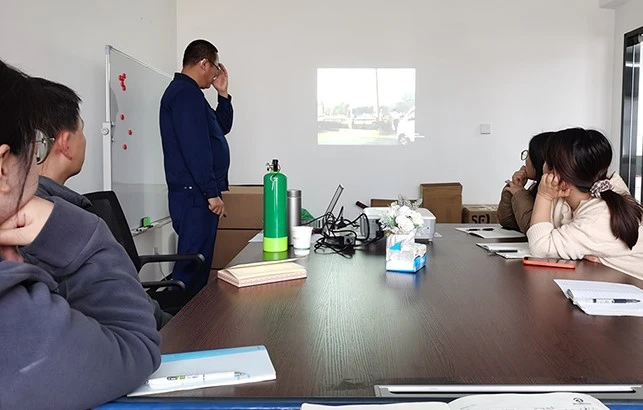
The training took place in the meeting room. Working through prepared slides, the instructor covered the causes of fires, how to check for daily hazards, how to handle an early-stage fire, and the essentials of evacuation. Because our site combines office and storage areas, he concentrated on the high-risk points we actually own: material storage, electrical equipment use and chemical storage, explaining the inspection standards item by item. Staff sat around the table, listened and took notes, then reflected on the safety risks they had overlooked in their own work. |
Real Cases: Breaking the "It Won't Happen to Us" Mindset
Theory alone rarely changes behaviour, so the training moved on to a case warning session. Real accident videos were projected on the screen. The footage and the loss reviews that followed showed how quickly an ordinary day can turn: a fire doubling in size while people hesitate, a blocked exit turning a survivable incident into a tragedy.
These real and painful cases did what slogans cannot - they broke the idea that "fire will not happen to us". Every attendee left that session with a clear understanding of what ignoring safety rules actually costs.
Hands-On: Pull, Aim, Squeeze, Sweep

|
A fire extinguisher placed on the conference table became the teaching tool. The instructor explained which type of fire each extinguisher suits, how to check one before relying on it, and demonstrated the full operating sequence: Pull, Aim, Squeeze, Sweep - correcting common wrong handlings as he went. More valuable than the formula, he drew the line between fighting a small fire and evacuating first, the judgement that prevents secondary injuries from blind rescue attempts. Colleagues raised questions from their own work scenarios, and he answered each one, tying fire safety knowledge back to our daily routines. |
|
Safety Is a Habit, Not a One-Off Event
Fire safety rests on prevention, and one training cannot keep us safe forever. No one is a bystander; every employee is the first person responsible for safety at their own post. This session combined theory, case warnings and hands-on teaching - not rules recited from a page, but life-saving knowledge handed directly to each team member.
Our company will keep fire safety activities on a regular schedule. Upcoming plans include live fire-extinguishing drills and routine hazard inspections, turning what was learned into daily habits: stay alert, check risks at your post, identify hazards early, call for help in time, put out small fires when it is safe to do so, and escape properly when it is not. Together we build a solid safety barrier - protecting our people first, and with them, our company property.