


TL;DR
PC wire is a single high-carbon steel wire (typically 4–10 mm) with plain, ribbed or indented surface. PC strand is 2, 3, 7 or 19 wires twisted together (typically 9.3–28.6 mm) and stabilized for low relaxation. In short: wire for pre-tensioned small elements (sleepers, poles, pipes), strand for high-load tendons (bridges, PT slabs, ground anchors). Below is the full comparison - structure, standards, bond behavior, tensioning practice - plus a checklist to confirm which one your drawing actually calls for.
Table of Contents
1. What Are They Made Of 2. Structural Difference 3. Standards Side by Side 4. Bond Behavior: Why Surface Matters 5. Applications: Which Element Uses Which 6. Tensioning and Site Practice 7. How to Confirm What Your Drawing Calls For
1. What Are They Made Of
Both products start from the same raw material: high-carbon steel wire rod (typically 0.7–0.85% C), drawn through dies to final diameter and then given a thermal-mechanical stabilization treatment to fix mechanical properties and minimize relaxation. In our production line, both PC wire and PC strand come from the same rod sourcing and drawing process - the difference starts after drawing.
That shared origin is good news for buyers: when you source wire and strand from one supplier, material traceability and quality logic match, and mill certificates follow the same format - one less variable to audit on site.
2. Structural Difference
This is the defining difference, and it drives everything else.
PC wire
is a single wire. Its working surface can be plain, or - in most modern pre-tensioning applications - spiral ribbed or indented to improve mechanical interlock with concrete. Diameters commonly run from 4.0 mm up to 12.7 mm, with 4.0–8.0 mm the most widely used range for standard elements.
PC strand
is a bundle: 2, 3, 7 or 19 wires helically twisted around a central "king" wire. The 7-wire construction - six outer wires around one center wire - is the industry standard for post-tensioning, in nominal diameters from 9.53 mm up to 21.8 mm, with 28.6 mm available for special designs. Because the outer wires are laid helically, the strand's effective steel area is slightly less than the sum of its wires - which is why standards specify nominal area and minimum breaking load, not per-wire values.
Practical consequence:
for the same steel grade, a strand delivers far higher breaking load per tendon (a 15.24 mm Grade 270 strand carries 260.7 kN minimum breaking load, roughly three times a heavy single wire) - but a wire gives you more evenly distributed bond along a thin element. Neither is "stronger"; they are built for different geometry.
3. Standards Side by Side
| Item | PC Wire | PC Strand |
|---|---|---|
| Common standards | EN 10138-2, GB/T 5223, BS 5896, ASTM A881 (indented wire) | ASTM A416/A416M, EN 10138-3, GB/T 5224, BS 5896 |
| Typical diameter | 4.0–12.7 mm | 9.3–28.6 mm (7-wire: 9.53–21.8 mm) |
| Structures | single wire: plain / spiral ribbed / indented | 1×2, 1×3, 1×7, 1×19 |
| Strength grades | 1570–1960 MPa (by standard) | Grade 250 (1720 MPa), Grade 270 (1860 MPa); higher on request |
| Relaxation (1000 h, 70% load) | ≤ 2.5% low-relaxation class | ≤ 2.5% low-relaxation class |
| Acceptance basis | per-coil mechanical test, mill certificate | per-coil mechanical test, mill certificate |
Values are typical standard classes; final acceptance always follows the mill certificate and the contract standard.
When comparing quotations, check the standard version as well as the grade: A416-2005 and A416/A416M-2012 are not identical documents, and EN 10138-3 defines slightly different tolerances than GB/T 5224. We have received inquiries where the buyer's drawing said "A416" but the site acceptance demanded EN 10138-3 properties - settling the standard early avoids that dispute.
4. Bond Behavior: Why Surface Matters
In pre-tensioned elements, force transfers from steel to concrete by bond alone, so surface geometry is a performance feature, not cosmetics.
- Spiral ribbed wire carries continuous helical ribs along its circumference while keeping constant cross-section area - stress distribution stays uniform, and bond-anchorage performance beats plain wire of the same diameter. This is why ribbed wire dominates sleeper, pole and spun-pile production today.
- Indented wire uses periodic surface indentations; bond is improved versus plain wire but the indent points concentrate local stress - a consideration for fatigue-sensitive designs.
- Strand bonds through its helical lay: the twist angle grips concrete well, and nominal lay length (commonly 12–16 × diameter) controls how sharply the tendon interacts with the surrounding concrete. Too short a lay can stiffen the strand; too long reduces bond efficiency - we have seen pre-tensioning plants specify lay length explicitly for this reason.
Summary:
ribbed wire surface (Feature) → uniform stress + superior interlock (Advantage) → sleepers crack less and keep transfer length within design (Benefit). Strand's controlled lay (Feature) → predictable bond and stretching behavior (Advantage) → post-tensioning force behaves as the PT designer calculated (Benefit).
5. Applications: Which Element Uses Which
PC wire is the default for pre-tensioned, thin, factory-made elements:
- railway sleepers and track slabs (spiral ribbed wire is standard here) - concrete poles, spun piles, hollow-core slabs - small precast panels and pipe manufacture
PC strand is the default for post-tensioning and high-load tendons:
- bridge girders (AASHTO / I-girders), PT building slabs and transfer plates - ground anchors, slope reinforcement, mining cable bolts (1×19) - silos, dams and large cast-in-place members
Rule of thumb:
if the element is cast around pre-stretched steel in a long-line bed, think wire; if tendons are threaded through ducts and stressed after concrete hardens, think strand. There are exceptions - some pole and pile producers use small strand for higher axial capacity - but the drawing will always state which one, and the specification table above helps you quote it correctly.

6. Tensioning and Site Practice
Wire and strand also differ in how they are stressed and anchored:
- Wire lines use pre-tensioning beds with dead/wetting anchors suited to wire diameters; individual wires are stressed in groups. Breakage during tensioning usually traces back to surface damage, kinks or equipment wear - handling discipline matters as much as material quality.
- Strand uses wedge-type anchorages (chuck + bearing plate) for post-tensioning, stressed strand-by-strand or multi-strand synchronized. Here anchorage-strand compatibility is critical: a 15.24 mm anchorage on 12.7 mm strand will slip or bite the wires. Always quote anchorage and strand together.
- Both products should arrive protected from moisture; rust pits and scratches become fracture origins under tensioning stress, whatever the product form.
If your project has had wire-breakage trouble, it is usually a handling/equipment issue rather than a material one - our field guide on preventing breakage during tensioning covers the checklist in detail.
7. How to Confirm What Your Drawing Calls For
Use this checklist before you send an inquiry - it prevents the most common quotation errors we see:
▸ 📋 Open the 9-point pre-inquiry checklist
☐ Product form stated explicitly (wire / 1×2 / 1×3 / 1×7 / 1×19)
☐ Nominal diameter and tolerance class
☐ Standard and version (e.g. ASTM A416/A416M-2012, EN 10138-3)
☐ Strength grade (1720 / 1860 / 1960 MPa) and relaxation class
☐ Surface requirement (plain / spiral ribbed / indented / phosphated / coated)
☐ Lay length requirement (strands) - standard or specified
☐ Coil/reel weight and packing preference
☐ Mill certificate and third-party inspection requirements
☐ Total quantity and delivery schedule
Send this filled checklist - or simply the drawing - to our sales team, and you will receive a tailored quotation within 24 hours, with the correct standard, grade and packing confirmed up front.
8. Quick FAQ (click a question to see the answer)
About Yuanxian:
▸ Q1: Which standard should I quote - ASTM A416 or EN 10138-3?
A: Quote whichever standard your design or contract references, and include the version year (e.g. A416/A416M-2012). Mixing standards between drawing and acceptance documents is a common cause of site disputes, so we confirm the standard before the proforma invoice is issued.
▸ Q2: Can wire and strand be mixed in one shipment?
A: Yes. Wire and strand differ in reel/coil dimensions, so quantities are planned into the packing scheme at order stage. Mixed loads are common for PC element factories ordering both products.
▸ Q3: Which breaks more often on site - wire or strand?
A: In our field experience, breakage usually traces back to handling damage, anchorage mismatch or equipment calibration rather than the product form itself. The handling checklist in section 6 addresses the most frequent causes.
▸ Q4: How fast can I get a quotation?
A: Send your specification, drawing, or the filled checklist from section 7 - a tailored quotation is returned within 24 hours.
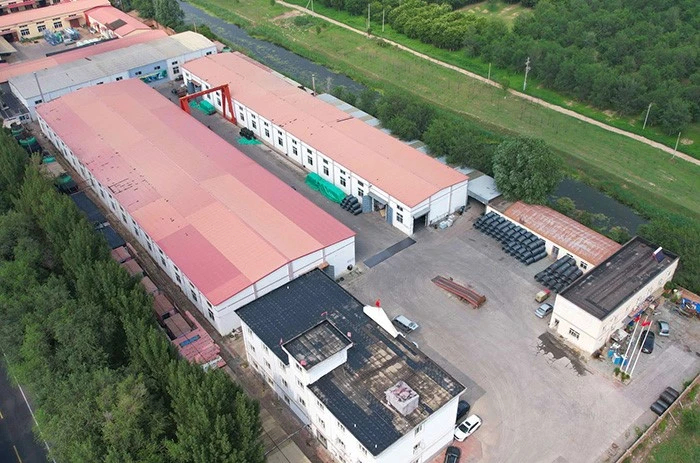
Yuanxian High-tech Material Trading (Tianjin) Co., Ltd manufactures and exports prestressed concrete wire and strand, anchorages and related engineering materials from its own production base, with batch testing, mill certificates and full export documentation issued with every order. Products are supplied to infrastructure and precast customers in multiple countries across Europe, South America and Southeast Asia.
Send your specification to our email or WhatsApp - quotation within 24 hours.
Ready to Source? Get Your Quotation in 24 Hours
Send us your specification, drawing or project requirement - our engineering team replies with a tailored solution and price.
Factory-source PC wire & strand · export documentation and third-party inspection reports provided
Email Address
Phone / WhatsApp